Carlo Wagner · 24 September 2026
Community Volunteers in Merrick Digitize 19th-Century Farm Family Photographs
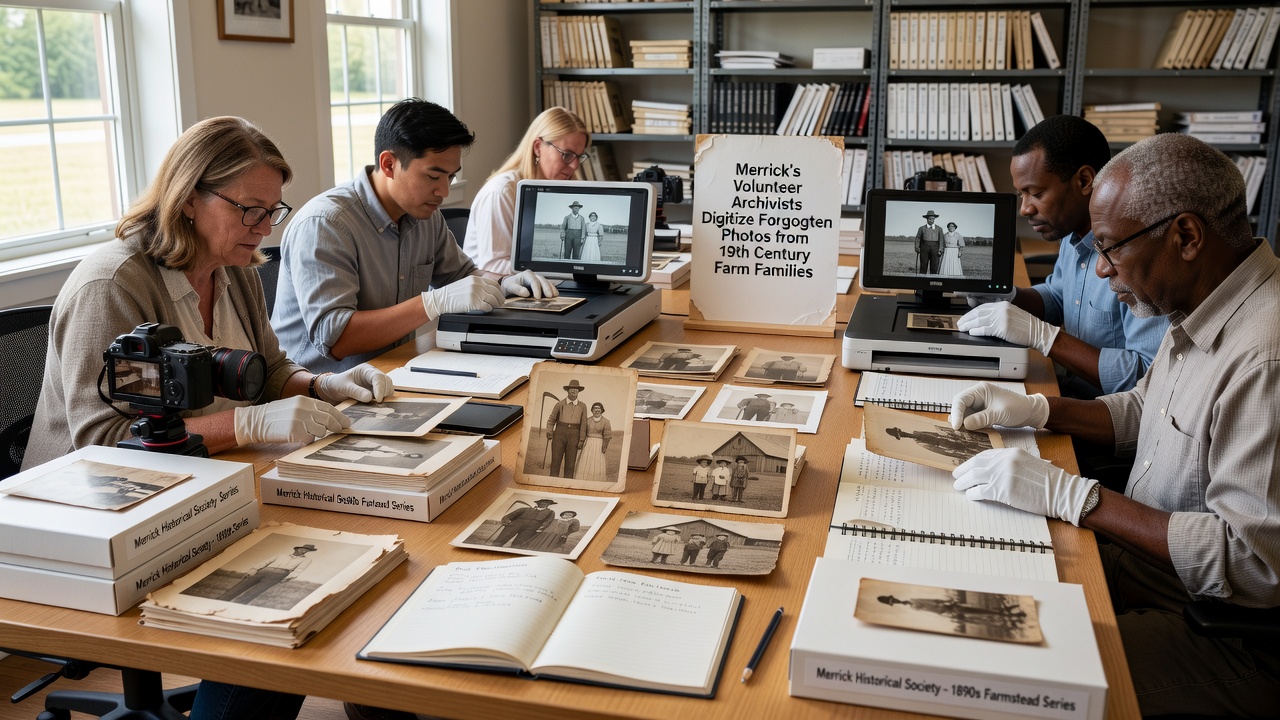
Volunteer archivists in Merrick have undertaken a systematic effort to locate, scan, and catalog photographic prints and negatives from 19th-century farm families in the area, and the work continues through organized sessions that began several years ago. The project draws on local collections stored in attics, barns, and historical society basements where descendants have preserved images of daily agricultural life, including field work, livestock, and family gatherings on properties that once lined the surrounding rural roads.
Origins of the Digitization Initiative
Local historical records show that Merrick's farm families maintained extensive visual documentation throughout the 1800s, yet many of these materials remained inaccessible until volunteers coordinated with property owners to collect and process them. Archivists began by identifying households whose ancestors operated dairy, produce, and grain operations, then established protocols for handling fragile paper prints and glass-plate negatives that required careful transport and climate-controlled storage. The initiative expanded after community members reported additional caches during property transfers and estate settlements, which added hundreds of previously unseen images to the inventory.
By September 2026 the team had completed scanning of more than 1,200 individual photographs and created metadata entries that record dates, locations, and identified individuals where possible. Each entry follows standardized description practices recommended by the National Archives, allowing researchers to search by subject matter such as crop types, farm equipment, or seasonal labor patterns.
Methods Used for Preservation and Access
Volunteers employ flatbed scanners calibrated for historical materials along with overhead cameras for oversized prints, and they store master files on redundant servers maintained by the local library system. Cross-referencing occurs with census data, land deeds, and newspaper notices from the period so that contextual information accompanies each digitized image. This approach reduces reliance on physical handling while enabling remote access for genealogists and agricultural historians who study regional farming practices.
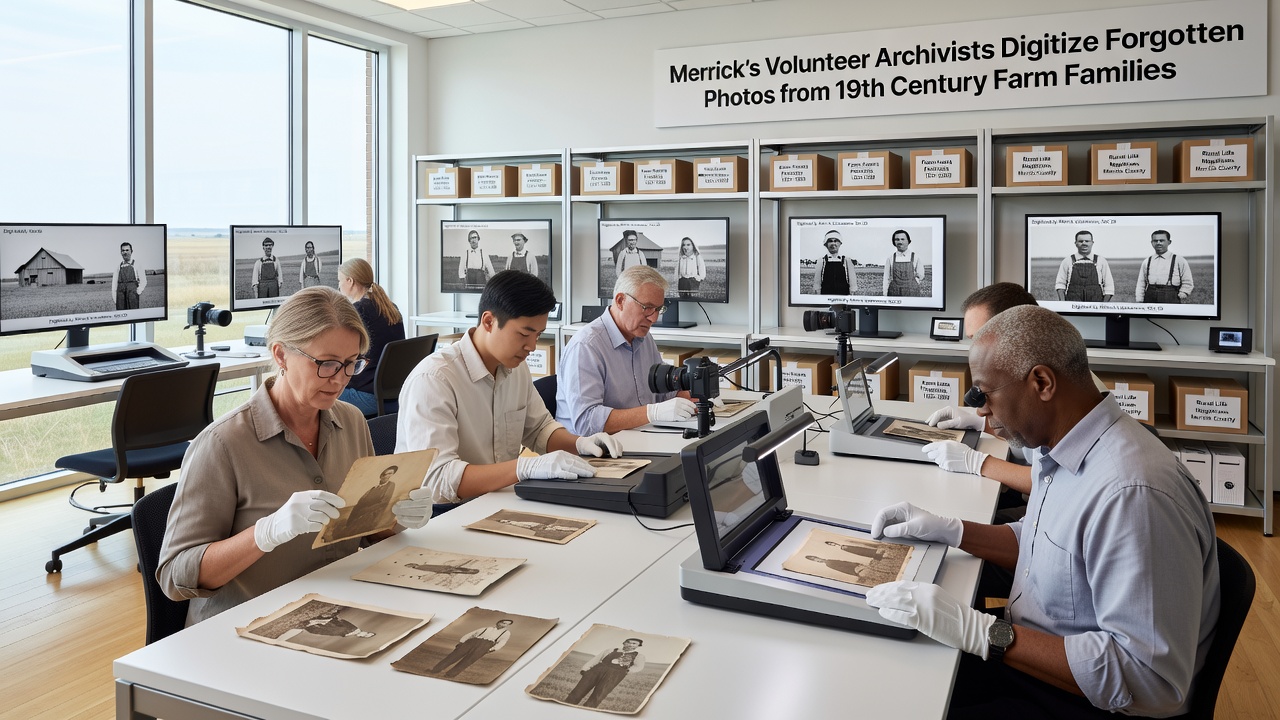
Training sessions cover topics such as image correction for faded emulsions and ethical considerations around privacy when living descendants appear in the frames. The group maintains a public portal where selected collections appear with searchable tags, and updates occur quarterly to reflect newly processed materials. Observers note that the archive has already supported several academic papers examining changes in land use and family structures between 1850 and 1900.
Impact on Local Historical Research
Historians have used the digitized collection to trace inheritance patterns and migration routes that connected Merrick farms to markets in New York City. One study correlated photographs of specific barns and fields with soil surveys conducted by the U.S. Department of Agriculture, revealing shifts in cultivation techniques during the late 19th century. Another project compared family group portraits with vital records to document mortality rates among children in agricultural households, providing quantitative data previously unavailable in written sources alone.
The archive also supplies material for educational programs at area schools, where students examine primary sources that illustrate changes in technology from horse-drawn plows to early steam engines. Partnerships with nearby universities have produced interactive maps that overlay photograph locations onto contemporary satellite imagery, illustrating how urban development replaced many of the original farmsteads.
Future Phases and Ongoing Work
Additional scanning stations are scheduled for installation in early 2027, and outreach continues to families who still hold uncatalogued images. Volunteers coordinate with regional institutions such as the International Council on Archives to align metadata standards with international best practices, which facilitates potential cross-collection searches with archives in other agricultural regions. Funding derives from local preservation grants and private donations earmarked specifically for digitization equipment and server maintenance.
Conclusion
The Merrick volunteer project demonstrates how coordinated community action can recover and preserve visual records of 19th-century farm life that might otherwise remain scattered or lost. As the collection grows, it supplies verifiable primary sources for researchers examining agricultural history, family demographics, and landscape transformation in the region. Continued participation from residents ensures that additional photographs enter the digital record each year, expanding the available evidence for future study.